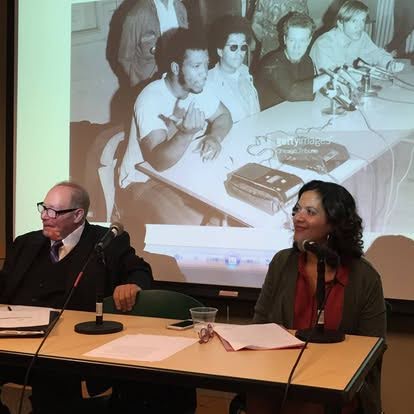

Jacqueline (Jacqui) Lazú is a writer, public historian, archivist, and community collaborator whose work bridges scholarship, cultural production, and grassroots activism. Born and raised in Hartford, Connecticut, a multiracial, working-class city where Puerto Rican communities were a vital part of the urban fabric but often excluded from cultural and political power. That reality informs her longstanding commitment to documenting Latinx and Afro-Caribbean life, exploring how people build community, resist marginalization, and assert identity through cultural expression. Grounded in Latino studies, Puerto Rican studies, and critical race theory, her research examines diaspora, racial justice, and the intersections of literature, performance, and public history across the Americas.
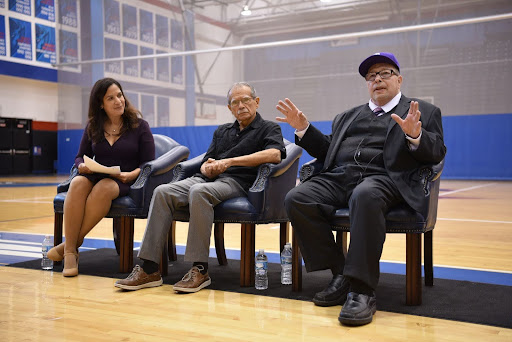
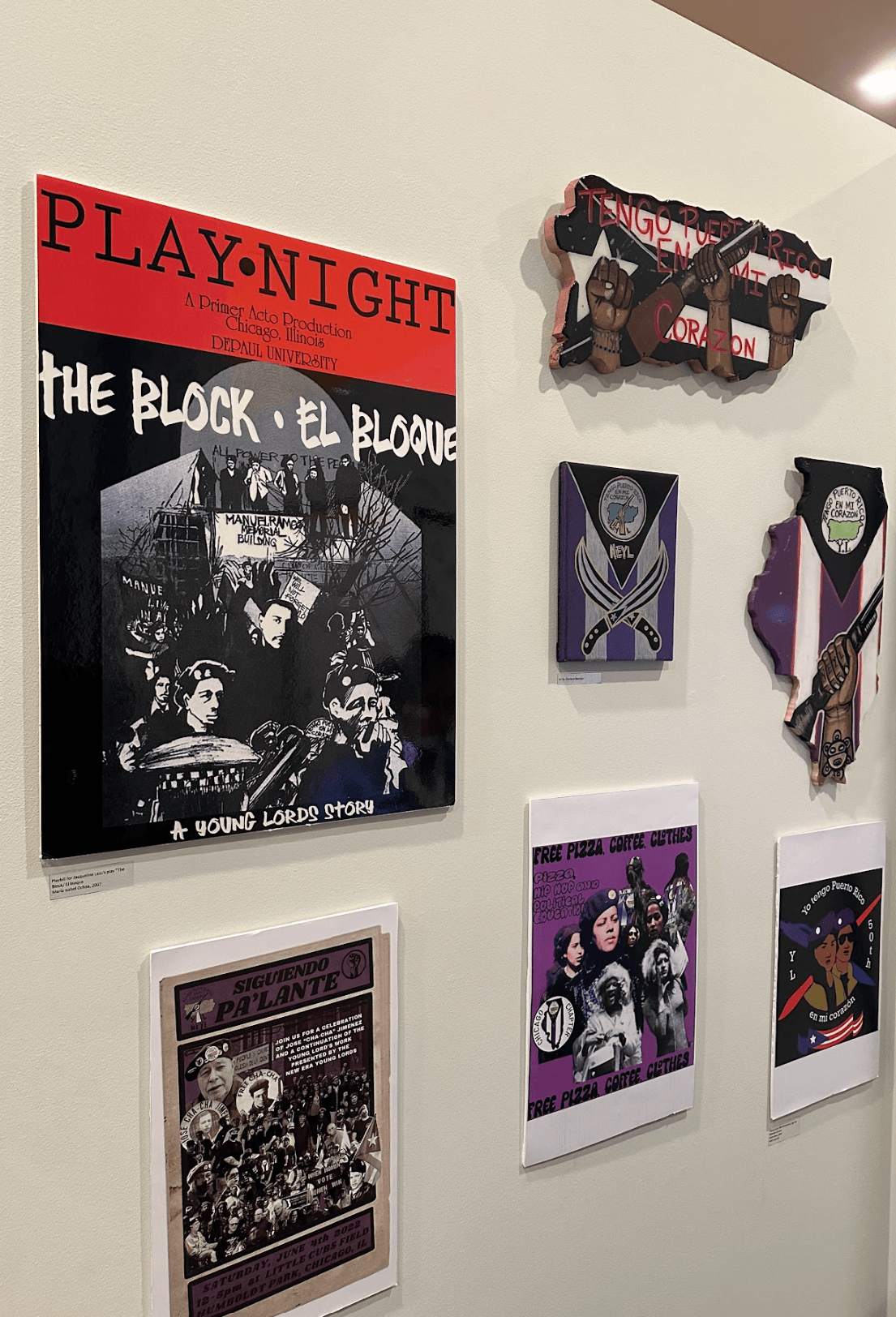
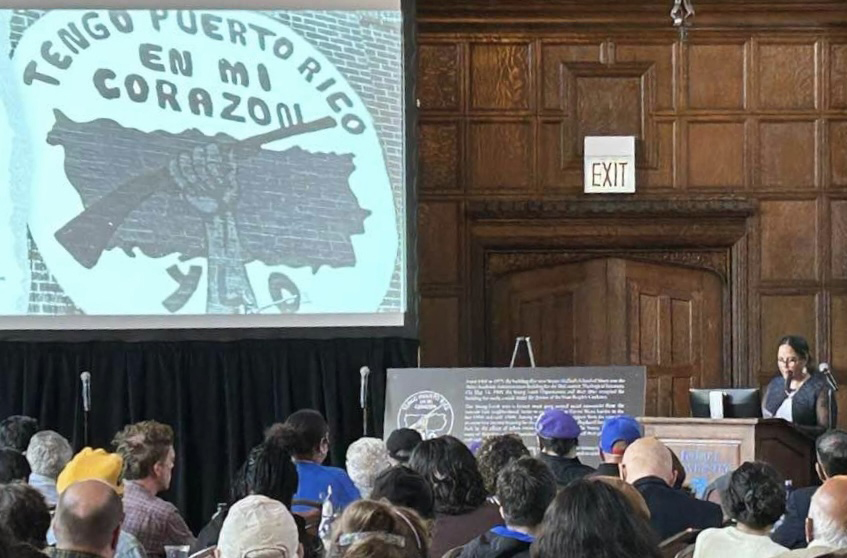
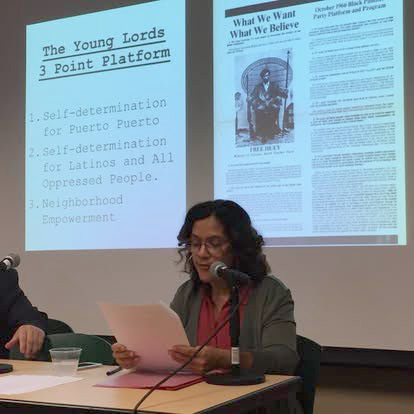
A central focus of Lazú’s work has been the Young Lords Organization, a grassroots Puerto Rican group that emerged in Chicago during the late 1960s and became a national force for community empowerment and racial justice. Originally a street gang, the Young Lords transformed into a political movement that fought against displacement, police violence, and inequality through direct action, radical education, and coalition building. Lazú has collaborated closely with former members to preserve and interpret their legacy. She helped establish the Young Lords Special Collections at DePaul University, curated public exhibitions, and has published works that document their history and cultural significance. Her forthcoming anthology, The Young Lords Speak: From the Streets of Chicago to Revolutionary Organization (Haymarket Books), brings together archival materials and firsthand accounts. She is also completing Stone Revolutionaries: The Origins of the Young Lords Movement, under contract with Duke University Press, which offers the first full-length critical history of the Chicago chapter’s transformation and political thought.
Beyond her scholarship on the Young Lords, Lazú’s research and teaching engage a wide range of themes in Latinx, Afro-Caribbean, and diasporic cultural production. With a background in literature and cultural studies, she examines how writers, performers, and artists articulate questions of identity, race, memory, and belonging. Her publications examine Nuyorican theater and the decolonial visions of contemporary Latinx authors. She has taught and written about Afro-Caribbean religions, transnational feminisms, and expressive culture as sites of political imagination and survival. Across this work, she highlights the ways that Latinx and Afro-Caribbean communities in the U.S. and the Americas navigate colonial legacies, cultural erasure, and structural inequality through creative forms and everyday acts of resistance.
Lazú has also helped shape academic programs and public initiatives at DePaul University that reflect the core themes of her research. She co-founded the Department of Criminology and served as Acting Chair, integrating her work on racial justice, social movements, and state violence into curriculum and faculty development. Her scholarship on the criminalization of Latinx communities informs this work, as does her long-standing commitment to scholar-activism. As Associate Dean for Research and Graduate Programs, she supported interdisciplinary collaborations across the college, and during her time directing the Community Service Studies Program, she helped launch the Inside-Out Prison Exchange Program, deepening her commitment to education as a tool for critical reflection and institutional change.
Lazú is also deeply engaged in public scholarship and community-based work. She has served on advisory boards for the Chicago History Museum and the Illinois Commission on Higher Education in Prisons, mentored junior faculty through national initiatives, and led organizations such as the Neighborhood Writing Alliance and the Afro Latin@ Institute of Chicago. Her collaborative projects, whether exhibitions, archives, or courses, are grounded in dialogue and mutual learning with artists, activists, students, and cultural workers. Across every space she occupies, Lazú remains committed to expanding access to knowledge, preserving community histories, and cultivating the next generation of critical thinkers and change agents.